Managed IT services cost typically ranges from $100 to $400 per user per month, depending on the pricing model, service scope, and business size. Small businesses usually pay $500 to $2,000 per month, while growing or mid-sized companies may spend $1,500 to $10,000+ monthly for fully managed IT services with security, monitoring, and managed IT support included.
Table of Contents
Introduction
Understanding managed IT services pricing is one of the most important steps for the business owners evaluating outsourced managed IT support services. Although the benefits of managed IT services are numerous, knowing how much managed IT services cost per month can help in avoiding hidden fees and choosing the best managed IT service provider.
This in-depth guide breaks down managed IT services cost, pricing models, real-world rates, and what businesses actually pay today. It is written from an industry perspective to provide clarity, transparency, and practical decision-making insights. Before moving forward to know the average cost of managed IT services let’s know firstly what exactly are managed IT services for small businesses and why is it important for outsourcing managed IT support.
What are Managed IT Services?
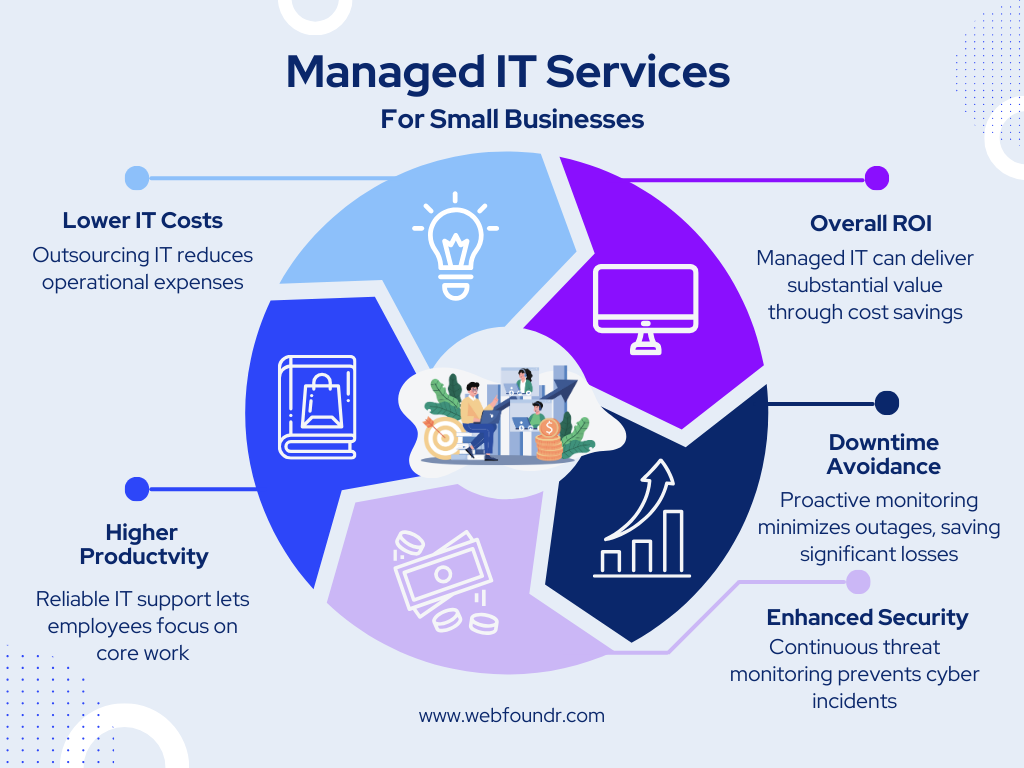
Managed IT services is an umbrella term referring to a comprehensive range of services. When a business gets managed IT services, it means it is referring to the outsourcing of IT management, support, and maintenance to a third-party provider known as a Managed Service Provider (MSP). For small business managed IT services, this approach provides enterprise-level IT support at a fraction of the cost of maintaining an internal IT department. It means by outsourcing IT management to a trusted provider MSP, businesses do not need to hire an in-house IT team, but they pay a predictable monthly fee for ongoing IT support and proactive system management.
Want to understand in more detail? Check out these blogs:
Factors Affecting Managed IT Services Pricing
1. Number of Users and Devices
The first most prominent factor affecting the cost of managed IT services is the number of users and devices managed per service. Most managed IT service providers base managed IT services rates per user per month or per device per month. It means the more users and endpoints covered, the more will be the cost of managed IT services as greater the managed IT support required.
2. Service Scope and Coverage
The second factor affecting the managed IT services pricing is the types of managed services and level of support provided. Some businesses choose basic IT support like remote monitoring and patching of their servers and workstations, which will be less costly. Others are looking for a managed IT service provider for fully managed IT support, which is more expensive but reduces downtime, security incidents, and long-term IT expenses.
3. Business Size and Complexity
The cost of managed IT services increases with the size and complexity of the business. The number of staff, the number of devices, and the number of locations can all impact managed IT services pricing. A smaller-sized business without multiple locations requires fewer managed service provider resources and expertise. Having employees working remotely adds a layer of complexity to your network for a managed IT service provider. It requires more management, which can elevate the average cost of managed IT services.
3. Compliance Requirements
Some industries like finance, healthcare, or law and accounting firms have strict compliance requirements. For such businesses to be compliant with regulations like DFARS/CMMC or HIPAA, managed IT service providers will need to build a more robust, secure infrastructure, which can affect your managed IT pricing and will require businesses to pay higher IT managed services cost than a simple single-office setup.
Quick Tip:
A reputable Managed IT Services provider should also take your organization’s goals into account. Your provider should help you plan and give you an idea of how IT service costs will increase. Need help? Read this guide to find a reliable managed IT service provider.
4. Cybersecurity Requirements
Security is another important factor determining the managed IT services pricing for small businesses. Most managed IT service providers often bundle cybersecurity services like endpoint detection and response (EDR), firewall management, email security, security awareness training in one package. Although the businesses that prioritize cybersecurity can expect slightly higher managed IT support pricing, but significantly lower risk exposure.
5. Onboarding and Setup Costs
Many providers charge MSP pricing for onboarding, which covers IT infrastructure audit, documentation, security baseline setup and tool deployment. Onboarding costs are usually one-time and range from a few hundred to several thousand dollars depending on complexity and size of your business.
6. Service Level Agreements (SLA)
The service level agreement SLA between you and your managed IT service provider outlines all the management services your business requires, with any additional fully managed services like 99.99% uptime and a dedicated account manager, leading to higher total costs. Additionally, the contract duration agreed upon can directly influence the long-term cost of IT management.
Quick Tip:
Numerous service providers will offer incentives for committing to longer contracts, potentially saving your organization thousands. However, it is crucial to diligently evaluate and select a trusted Managed IT Services Provider (MSP) when considering a multi-year contract.
Common Managed IT Service Pricing Models
There are some common managed IT service pricing models used by managed service providers today. Although the models are named the same as basic, standard, or enterprise, the managed IT services pricing rates can be different based on the services included in each package. So, it’s important to understand managed IT services pricing models to get a clear comparison of what you’ll get from your MSP.
1. Per-User Pricing Model
This is the most common model for managed IT services for small businesses. This model works with having a flat monthly fee per user and it covers the IT management of all the devices used by each user. This managed IT service pricing model is best for the businesses that have predictable staffing levels and remote teams.
2. Per-Device Pricing Model
This managed services pricing model charges are based on each device rather than each user. It covers the costs of all workstations and servers and other devices used by each employee in the business. This model is best for the businesses with shared workstations as it can reduce IT management costs for those companies.
3. Tiered Managed IT Services Pricing
The tiered managed IT services pricing model includes different service packages offered by MSPs. Mostly these packages are named as basic, standard, and premium or bronze, silver and gold, depending on the features, support level and the cost of managed IT services included in each package. These allow the businesses to choose the package according to their needs as they scale up. Higher tiers include more security, faster response times, and proactive management.
4. A La Carte/Project-Based
La Carte is a project-based managed IT services model that allows businesses to select the services of their own choice and pay for them individually. This managed service pricing model is best for defined needs, but there is a chance that you might need some services that you didn’t know you needed. So, consult your managed IT service provider before making a decision.
5. All-Inclusive Fully Managed IT Services
This model provides fully managed IT support with no surprise costs. This is the most transparent and predictable managed IT services pricing approach. For a fixed monthly rate, your managed IT service provider takes full control of your IT department. Many owners love this because it includes unlimited IT support, security stack, backup and disaster recovery, and strategic IT consulting.
6. Hourly or Break-Fix Pricing
Some ITpartners charge hourly rates for IT managed services support for businesses. However, whether you are a small business or an enterprise, it’s not recommended that you go with this IT services model. It’s because it leads to unpredictable costs and reactive IT management.
Managed IT Services Pricing Models
| Service Type | Price Range |
|---|---|
| Per-User Pricing | $100 – $400 per user / month |
| Per-Device Pricing |
$50 – $100 per workstation $100 – $400 per server / month |
| Tiered Pricing |
Starts around $50 for basic monitoring Up to $400 per user / month for full service |
| Flat Fee / Fully Managed Pricing | $300 – $500+ per user or device / month |
| IT Support Services (Hourly) | $100 – $250 per hour |
Read our guide to know what’s included in managed IT services for small businesses.
Average Cost of Managed IT Services Pricing
Understanding what is and is not part of the service agreement is an important part when assessing the average cost of managed IT services pricing. Managed services may seem more expensive on the surface, but you often receive additional services that your internal IT cannot provide.
Your best managed IT service provider should explain how they provide value that outweighs the cost, which is an important consideration when leveraging a managed service provider. Here we have mentioned the current average cost of managed IT services. These figures reflect industry-wide ranges for managed IT services costs and may vary by region and service scope.
Managed IT Services Pricing Range for Businesses
| Business Type | Average Monthly Cost |
|---|---|
| Small Business (5–10 users) | $500 – $2,000 |
| Growing Business (10–25 users) | $1,500 – $5,000 |
| Mid-Sized Business (25–50 users) | $4,000 – $10,000 |
| Fully Managed IT Services (Per User) | $100 – $200 per user |
How Much Will My Managed IT Services Cost?
If you have ever tried to get a clear answer for how much do managed IT services cost for small businesses, or how much I should spend on IT support, you might have been left in the dark. Why? Firstly, MSPs do not list the proper managed IT services pricing up front, which means you can’t know the exact cost of managed IT services. Secondly, the cost of managed IT services varies depending on the MSP.
To know how much managed IT services cost per month, the answer depends on your specific needs. Let’s have a cost comparison of In-House IT vs Managed IT services to exactly determine how much Managed IT services cost.
Hiring an in-house IT professional often costs $60,000–$90,000 annually, without including training and tools. In contrast, with outsourcing to a managed service provider, you’ll enjoy the benefits of managed IT services for small businesses , like an entire IT team, 24/7 fully managed IT support, advanced cybersecurity, and many more services at a significantly lower IT managed services cost.
Example Cost Scenarios
Scenario 1: Small Office (8 Users)
- Fully managed IT support
- Basic cybersecurity
- Average cost: $800–$1,600 per month
Scenario 2: Professional Services Firm (20 Users)
- Advanced security
- Cloud management
- Average cost: $2,500–$4,000 per month
Scenario 3: Growing Business (40 Users)
- Fully managed IT services
- Compliance and backup
- Average cost: $6,000–$9,000 per month
Final Thoughts on Managed IT Services Pricing
Managed IT services pricing is not just about cost, it’s about value, reliability, and long-term business protection. While the average cost of managed IT services may seem like a significant investment, it is far more affordable than downtime, security breaches, or inefficient IT operations. For businesses seeking stability, scalability, and security, fully managed IT support delivers measurable returns and peace of mind.
FAQ
1. What should be included in Managed IT Services Pricing?
Managed IT services include all the necessary services needed to take care of the business’s complete IT infrastructure. These services include unlimited fully managed IT support, proactive monitoring and maintenance, cybersecurity protection, backup and disaster recovery, software patching, and strategic IT planning. When evaluating the cost of managed IT service providers, ensure that your MSP provides all these services.
2. How much do managed IT services cost for small businesses?
The average cost of managed IT services for small businesses ranges from $100 to $250 per user per month, averaging about $1000 to $3000 per month total. However, the exact cost of managed IT services varies greatly depending on the type of services included, size and structure of business and the managed IT services pricing model chosen.
3. What’s included in the fully managed IT services package?
Webfoundr’s Fully Managed IT Services plan is offered at a predictable flat monthly fee and provides a complete, end-to-end IT fully managed IT solution rather than just basic IT support. With this plan, your best managed IT service provider takes full responsibility for your entire IT environment, including domain and hosting management, website development and maintenance, cybersecurity, system monitoring, backups, and ongoing performance optimization.
4. How much do managed IT services cost per hour?
Managed IT services are not typically priced hourly, but for break-fix or project-based services, hourly pricing is used. Those IT support services typically cost $100 to $250 per hour when billed on an hourly or break-fix basis. However, hourly IT support often results in unpredictable costs and can quickly exceed the monthly cost of fully managed IT services, especially as your business grows. This is the reason why most businesses shift to managed IT services pricing models instead.
5. How are managed IT services priced?
Managed IT services are usually priced using monthly subscription models, such as per-user pricing, per-device pricing, tiered service packages, or all-inclusive flat-rate plans. These managed services pricing models provide predictable costs and often include unlimited fully managed IT support, monitoring, cybersecurity, and maintenance.